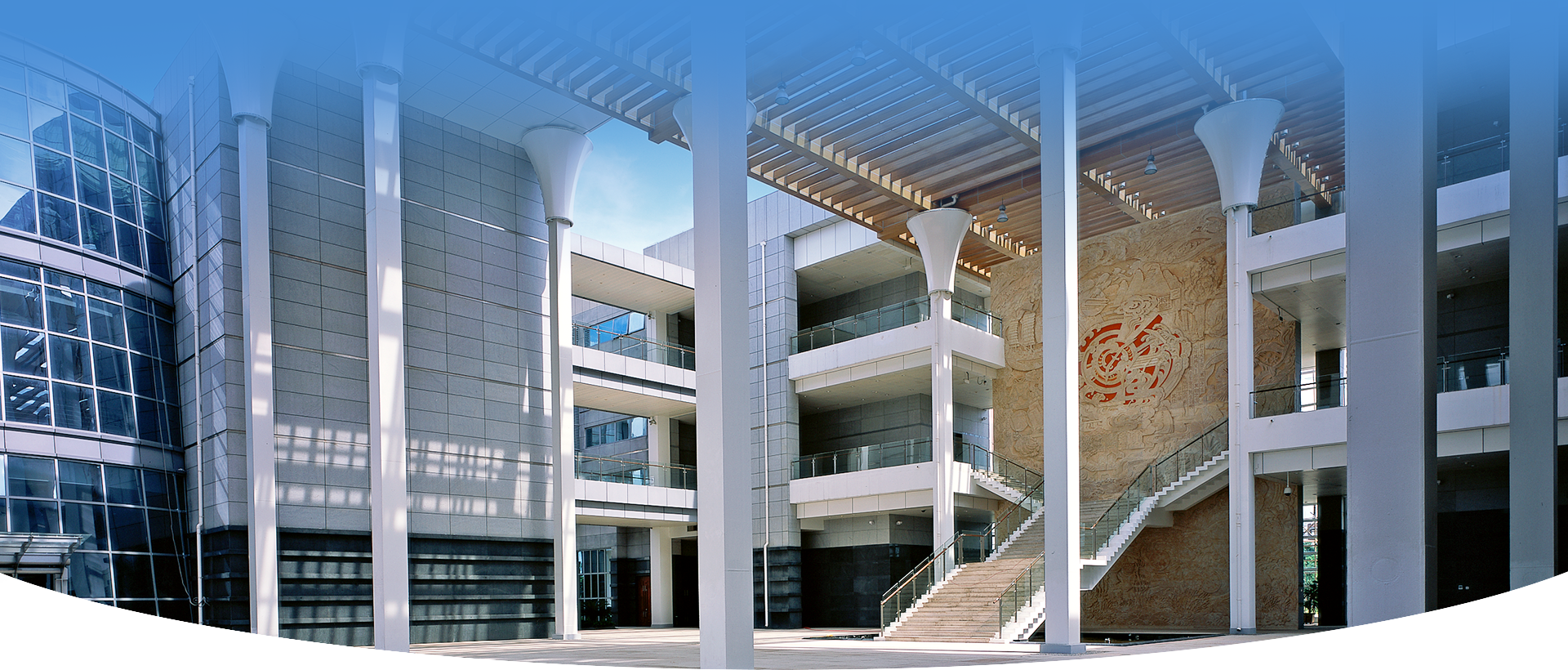
海南省博物馆是海南省内一座综合性博物馆,坐落于海口市琼山区国兴大道76号,于2008年11月15日开馆,为国家一级博物馆、国家4A级旅游景区。先后获评“全国文化和旅游系统先进集体”“全国文物系统先进集体”,并入选全国中小学生研学实践教育基地、全国首批“大思政课”实践教学基地。
Hainan Museum is a comprehensive museum located at 76 Guoxing Avenue in Qiongshan District, HaikouCity, Hainan Province. Opened to the public on November 15, 2008, it is a National First-Class Museum and a national 4A-rated tourist attraction. The museum has been recognized as an “Advanced Collective in the National Culture and Tourism System” and an “Advanced Collective in the National Cultural Heritage System.” It has also been designated as a national study and experiential learning base for primary and secondary school students and selected as one of the first national practice and teaching bases for the “GreatIdeological and Political Education” initiative.
海南省博物馆展览以明代海南才子丘濬《南溟奇甸赋》为纲,从地理、资源、文史、风俗、非遗及海洋文明等维度,多层次、全方位展示海南本土文化魅力。现有“南溟泛舸——南海海洋文明陈列”“方外封疆——海南历史陈列”“仙凡之间——海南风情陈列”三大基本陈列,“木中皇后——海南黄花梨陈列”“香中魁首——海南沉香陈列”两大专题陈列,并结合非遗“四个一”展示体系打造海南非物质文化遗产专题展。其中,“大海的方向——华光礁I号沉船特展”“南溟泛舸——南海海洋文明陈列”分别斩获第十届(2011年度)、第十五届(2017年度)全国博物馆十大陈列展览精品奖。
Hainan Museum’s exhibitions are anchored bytheOde to a Remarkable Land in the Southern Sea (Nanming Qidian Fu), a celebrated work by Qiu Jun, a distinguished scholar from Hainan during the Ming dynasty. From multiple perspectives, including geography, natural resources, history and culture, local customs, intangible cultural heritage, and maritime civilization, the museum offers a comprehensive portrait of Hainan’s distinctive cultural heritage.The museum currently presents three permanent exhibitions: Over the Southern Sea—Exhibition on South China Sea Maritime Civilization; A Remote Border Region—Exhibition of theHistory of Hainan; and A Harmony of Nature and Humanity—Exhibition of Hainan Culture and Customs.These are complemented by two special exhibitions: Queen of Woods—Exhibition of Hainan Huanghualiand The Finest Fragrance—Exhibition of Hainan Agarwood. The museum has also developed a dedicated exhibition on Hainan’s intangible cultural heritage as part of its “Four-in-One” framework for presenting Hainan’s intangible cultural heritage.Among these exhibitions, Toward the Sea: Special Exhibition on the HuaguangjiaoNo. 1 Shipwreckand Over the Southern Sea—Exhibition on South China Sea Maritime Civilization received the Award for Excellence among China’s Top Ten Museum Exhibitions at the 10th (2011) and 15th (2017) editions, respectively.
近年来,海南省博物馆推出的“千古风流 不老东坡——苏轼主题文物展”荣膺第二十二届(2024年度)全国博物馆十大陈列展览精品奖,“譬若天工——中国古代文物中的科技奥秘”入选国家文物局、中央网信办“博物馆里读中国——弘扬中华优秀传统文化、培育社会主义核心价值观”主题展览推介项目。
In recent years, Hainan Museum has presented a number of notable exhibitions. “Timeless Elegance—Su Shi Themed Cultural Relics Exhibition,” a cultural artifact exhibition dedicated to the celebrated Song-dynasty poet and statesman Su Shi, received the Award for Excellence among China’s Top Ten Museum Exhibitions at the 22nd edition (2024). “Heavenly Craftsmanship—Mysteries of Science and Technology in Ancient Chinese Relics” was also selected for the recommended exhibition program “Discovering China in Museums:Promoting China’s Outstanding Traditional Culture and Fostering Core Socialist Values,” jointly promoted by the National Cultural Heritage Administration and the Cyberspace Administration of China.
海南省博物馆是中外游客全方位了解海南自然风貌、民族历史与文化艺术的重要窗口,吸引着八方游客纷至沓来。海南省博物馆将持续积极策划、引进高质量展览,深化国内外合作洽谈,致力打造海南自贸港“观中国,看世界”的文化枢纽。
Hainan Museum serves as avitalgateway for visitors from China and around the world to discover the island’s natural landscapes, the history and cultures of its ethnic communities, and its rich cultural and artistic heritage, drawing visitors from near and far. The museum is committed to curating and bringing in high-quality exhibitions, deepening partnerships and exchanges at home and abroad, and establishing itself as a cultural hub for the Hainan Free Trade Port—where visitors can discover China and explore the world.
·南溟奇甸一赋成展
From Ode to Exhibition: A Remarkable Land in the Southern Sea
明太祖朱元璋敕曰:“南溟之浩瀚,中有奇甸数千里”,明代海南名臣丘濬依此作《南溟奇甸赋》,歌颂了海南宝岛。值海南省博物馆二期扩建之际,巧以“南溟奇甸”为题,以赋之篇章内容为纲,编创出“南溟奇甸”展陈体系,依次对海南的奇特地理、独特资源、神奇文史、奇风异俗和海洋文明展开陈列,既整体展示了海南宝岛的历史风采及其独特文化,又化展陈为文化旅游攻略,充分呈现了海南宝岛的地理特征、自然资源、历史人文和民族风情。
Zhu Yuanzhang, the founding emperor of the Ming dynasty, once said, “Amid the vast expanse of the Southern Sea lies a remarkable island stretching for thousands of li(oneliis approximately 500 meters).” Inspired by these words, Qiu Jun, a distinguished statesman and scholar from Hainan during the Ming dynasty, composedtheOde to a Remarkable Land in the Southern Sea, celebrating the island’s beauty and distinctive character.As part ofHainan Museum’s second-phase expansion, the exhibition takes “A Remarkable Land in the Southern Sea” as its overarching theme. Following the chaptersand themes of Qiu Jun’s ode, it explores Hainan’s remarkable geography, unique natural resources, fascinating history and culture, diverse customs and traditions, and rich maritime civilization.The exhibition offers a panoramic view of Hainan’s historical heritage and distinctive culture, while also providing visitors with an engaging introduction to the island’s cultural landscape. Through a rich array of exhibits and interpretive materials, visitors can gain a deeper understandingof Hainan’sgeographical features, natural resources, historicaland cultural heritage, and diverse ethnic traditions.
Three Permanent Exhibitions: A Journey Through Hainan’s History and Culture
南溟泛舸——南海海洋文明陈列
Over the Southern Sea—Exhibition on South China Sea Maritime Civilization

南溟之浩瀚,舟船往来。据古籍记载,远在秦汉时期,环南海沿海居民已经航行于南海之上,穿越南海诸岛,有了大规模的远洋航海通商和渔业生产活动。他们滨海而居,因海而生,创造出了内涵丰富的南海海洋文明。海南岛西部北部湾近海渔民从事着海洋捕捞、海洋养殖、煮海晒盐等多种多样的生产活动,他们接受着海洋的馈赠,形成了特色鲜明的渔家生活写照。海南岛东部远洋渔民最早发现南海诸岛礁,并予以命名,世代以此作为传统作业渔场,成为开发南海的重要见证。而一艘南宋沉船“华光礁I号”的发现,更是再现了古代海上丝绸之路之航海之光,书写了中华民族海洋文明之历史篇章,追溯着中西方文化交流之源远流长!
The vast Southern Seashavelong been traversed by shipsand boats. Ancient records indicate that as early as the Qin and Han dynasties, coastal communities around the South China Sea had already been sailing these waters, navigating among the islands and reefs, and engaging in long-distance voyages, maritime trade, and fishing. Living by the sea and making their livelihoods from it, they created a rich and distinctive South China Sea maritime civilization. Along Hainan Island’s western coast in the Beibu Gulf, fishermen engaged in a wide range of activities, from fishing and marine aquaculture to salt production through seawater evaporation. Drawing on the resources of the ocean, they developed a unique way of life shaped by their deep connection with the sea.On the eastern coast of Hainan Island, ocean-going fishermen were among the earliest to discover and name islands and reefs in the South China Sea. For generations, they fished these waters as their traditional fishing grounds.Their activities provide important evidence of China’s long-standing maritime presence and engagement in the South China Sea.The discovery of the Huaguangjiao No. 1, a Southern Song dynasty shipwreck, offers an even more vivid glimpse into this maritime past. Its remains illuminate the vibrant seafaring networks of the ancient Maritime Silk Road, opening a window onto China’s long maritime history and civilization, as well as the enduring cultural exchanges between China and the wider world!
该展览通过南海海域重要的沉船考古发现和丰富的出水文物,重现历史上兴旺发达的中西海上贸易盛景。特别是西沙群岛发现的“华光礁I号”沉船遗迹和遗物,这是中国南宋时期海外贸易的重要史迹,也是中国水下考古从近海走向远海的里程碑。该展览分为两部分。第一部分为“丝路帆影”,第二部分为“祖宗之海”。
Drawing on major shipwreck discoveries in the South China Sea and a wealth of artifacts recovered from them, the exhibition brings to life the thriving maritime trade between China and the West in centuries past. Among the most significant are the remains and artifacts from the Huaguangjiao No. 1shipwreck, discovered in the Xisha Islands. Dating to the Southern Song dynasty, the wreck provides important evidence of China’s overseas trade during the period and marks a milestone in the evolution of Chinese underwater archaeology from coastal waters to the open sea.The exhibition is organized into two sections: “Sails Along the Maritime Silk Road” and “TheAncestral Sea.”
方外封疆——海南历史陈列
A Remote Border Region—Exhibition of theHistory of Hainan

海南省位于我国最南端,包括海南岛和南海诸岛及其广阔海域。琼州海峡作为天然屏障,使海南岛孤悬海外。
Hainan Province lies at the southernmost tip of China, encompassingHainan Island, the islands of the South China Sea, and the vast waters surrounding them.The Qiongzhou Strait forms a natural barrier, leaving Hainan Island isolated from the mainland.
战国之前,地在荒服之外,为百越的骆越之地;秦时,海南岛为象郡之外徼;及至两汉,朝廷二度遣伏波将军南定,置珠崖、儋耳两郡,海南岛正式归入汉朝版图;三国,吴主复征朱崖,属吴之交州;隋灭南朝,冼夫人率部归附,请置崖州,复为一统;入唐,建置益备,以崖州都督府辖诸州县,海南岛自此称“琼”,其中南部的振州(在今三亚)管辖西南至大海千里;宋代,中土人士往来络绎不绝,舟船远航千里长沙、万里石塘;入元,设海南道,更行南海天文测验,厘定海疆;明清,置琼州府,人文蔚起,奇甸日新,已然琼台福地。
Before the Warring States period, the region lay outside the empire’s farthest frontier and was inhabited by the Luoyue, one of the Baiyue peoples. During the Qin dynasty, Hainan Island lay beyond the southern frontier of Xiang Commandery. Duringthe Han dynasty, the imperial court twice dispatched General Fubo to pacify the region and established the commanderies of Zhuya and Dan’er, formally bringing Hainan Island into the territory of the Han Empire.During the Three Kingdoms period, the ruler of Wu launched another campaign against Zhuya, and Hainan became part of Jiaozhou under Wu. After the Sui dynasty conquered the Southern Dynasties, Lady Xian(Xian Furen)led her forces to submit to the Sui court and requested the establishment of Yazhou, bringing the island once again under unified rule.During the Tang dynasty, Hainan’s administrative system became increasingly well developed. The Yazhou Protectorate administered the island’s prefectures and counties, and Hainan thereafter came to be known as “Qiong.” In the south, Zhenzhou (in present-day Sanya) governed a vast area extending some 1,000 li southwestward to the sea.During the Song dynasty, people from the Central Plains traveled to and from Hainan in growing numbers, while ships sailed thousands of li across the waters known as Qianli Changsha and Wanli Shitang. During the Yuan dynasty, the Hainan Circuit was established, and astronomical observations were conducted over the South China Sea to chart and define its maritime boundaries.During the Ming and Qing dynasties, Qiongzhou Prefecture was established, and Hainan entered a new era of cultural flourishing and prosperity. The island continued to grow and thrive, emerging as a land of prosperity and promise.
该展览采用新角度、新层次、全方位展示海南历史发展沿革和人文变迁,用丰富的图文资料和文物展品全面系统地展示了海南岛从距今40--60万年前的史前时代到海南岛民国时期的漫长历史发展变化,带领观众穿越时空的隧道,纵览海南历史发展全貌。该展览分为四个部分。第一部分为“孤悬海外”,第二部分为“方外封疆”,第三部分为“岛海归宗”,第四部分为“奇甸日新”。
The exhibition presents Hainan’s history and culture from a fresh perspective, offering a comprehensive overview of the island’s historical development and social and cultural evolution. With a wealth of visual and textual materials and a rich collection of cultural artifacts, the exhibition traces Hainan’s long history from prehistoric times, 400,000–600,000 years ago, to the Republic of China era. Taking visitors on a journey through time, it offers a sweeping panorama of the island’s historical evolution.The exhibition is organized into four sections: “An Island Far from the Mainland,” “A Remote Border Region,” “Hainan Rejoins the Nation,” and “The Continuous Development of Hainan.”
仙凡之间——海南风情陈列
A Harmony of Nature and Humanity—Exhibition of Hainan Culture and Customs

海南是一个多元文化的交汇之地。千百年来汉族、黎族、苗族、回族等各民族文化在热带海岛的摇篮中汇集、融合、发展,形成丰富多彩的海岛文化。纵观琼岛,本土文化厚重,移民文化豁达,水上生活奇特,陆地生活平实。作为文化主体的主人,黎族质朴,苗族深沉,回族精明,汉族实干。俯视海南,火山文化、南洋骑楼、黎族织锦、苗族文绣星罗棋布……从琼北、中部绵延至天涯海角,可谓十里不同风,百里不同俗。
Hainan is a crossroads of diverse cultures. For centuries, the cultures of the Han, Li, Miao, Hui, and other ethnic communities have converged, blended, and evolved on this tropical island, giving rise to a vibrant island culture. Across Hainan, indigenous traditions are deeply rooted, immigrant cultures are open and inclusive, life on the water is distinctive, while life on land is simple and down-to-earth. As the creators and inheritors of their respective cultural traditions, the Li embody simplicity and sincerity, the Miao quiet depth and reserve, the Hui ingenuity and resourcefulness, and the Han practicality and a can-do spirit. Across the island, the cultural landscape is dotted with volcanic culture, Nanyang-style arcaded houses(Qilou) , Li brocade, Miao embroidery, and much more. These distinctive cultural traditions can be found from northern and central Hainan to the farthest reaches of Tianya Haijiao, creating a cultural landscape in which customs and traditions vary from one place to the next and from one region to another.
该展览通过丰富的文物和史料,配合场景、模型、雕塑、创作画、视频、动画和观众互动触屏等多种展示手段,带领观众纵观琼岛,领略本土文化的厚重,移民文化的豁达,水上生活的奇特,陆地生活的平实。千百年来汉族、黎族、苗族、回族等各民族文化在热带海岛的摇篮中汇集、融合、发展,形成丰富多彩的海岛文化。该展览分为四部分。第一部分为“北部湾情”,第二部分为“闽风琼韵”,第三部分为“五指山风”,第四部分为“天涯殊俗”。
Drawing on a rich collection of artifacts and historical materials, the exhibition combines a variety of exhibition and display techniques,including scenes, models, sculptures, originalpaintings, videos, animations, and interactive touchscreens,to take visitors on a journey across Hainan. Along the way, they can experience the depth of Hainan’s local culture, the openness of its migrant traditions, the distinctive ways of life on the water, and the simple rhythms of life on land.For centuries, the cultures of the Han, Li, Miao, Hui, and other ethnic communities have converged, blended, and evolved on this tropical island, giving rise to a vibrant island culture.The exhibition is organized into four sections: “The Spirit of the Beibu Gulf,” “The Charm of Fujian and Hainan,” “Wuzhishan Culture and Traditions,” and “The Distinctive Customs of Tianya.”
•二个专题展,赏花梨沉香
TwoSpecialExhibitions: Huanghuali and Agarwood
木中皇后——海南黄花梨陈列
Queen of Woods—Exhibition of Hainan Huanghuali

黄花梨别名降香黄檀,是海南特有的乔木树种,在海南岛西部及西南部海拔400米以下的平原或丘陵地区分布较多,其性耐干旱、耐贫瘠。因木质坚韧,琼岛先民就地取材,广泛用于建造居所、农牧工具、饮食器皿等,形成了独具特色的琼作花梨。花梨木以温润、内敛、沉静的自然秉性,质朴、典雅、华美的独特纹饰,还有难掩之香味色泽,成为高档家俱的首选木材,与小叶紫檀一起被誉为“木中帝后”。这些寻常百姓家的独木器具,一木一器,既为生产与生活所需,也是源于生活之平民艺术,成为最具海南特色的文化符号。展览中“花梨出琼州”部分为观众复原了花梨木的生长环境,介绍了花梨木的药用价值;“琼作花梨”部分展示了由花梨木制作而成的农用工具、狩猎工具等生产生活工具。以及匠人巧妙运用花梨木天然纹理,制作成精美绝伦各类摆件,如根雕和文玩用品等;“花梨时代”部分展示了海南黄花梨制作而成的各类家具,如椅凳类、桌案类、床榻类等种类。展览还设有“花梨坊”区域,还原了海南黄花梨传习所,展示给观众有关制作花梨木工艺的场景,以及与花梨木有关的文创产品。
Huanghuali, also known as fragrant rosewood (Dalbergia odorifera), is a species of tree native to Hainan. It grows mainly on the plainsorlow hills of western and southwestern Hainan at elevations below 400 meters and is well adapted to dry, nutrient-poor conditions. Thanks to its exceptional strength and durability, the island’s early inhabitants made extensive use of locally sourced Huanghuali to build dwellings and make farming and herding tools, eating and drinking vessels, and other everyday objects. Over time, these practices gave rise to the distinctive Hainan style of Huanghuali craftsmanship known as Qiongzuo Huali.With its warm, understated beauty and naturally tranquil character, Huali is prized for its simple yet elegant grain patterns, rich color, and subtle fragrance. It has long been prized as an exceptional wood for high-end furniture and, together with red sandalwood, has traditionally been regarded as “The Finest of Woods.” Yet these humble wooden objects from ordinary households were more than practical necessities. Each was made for a particular purpose, embodying a form of folk art rooted in the lives of ordinary people. Today, they stand as some of Hainan’s most distinctive cultural symbols.The “Huali from Qiongzhou” section recreates the natural environment in which the trees grow and introduces their medicinal uses. The“Qiongzuo Huali” sectionshowcases farming tools, hunting implements, and other objects used inproduction andlife, all made from Huali. It also features exquisite decorative and collectible objects crafted by artisans who skillfully harnessed the wood’s natural grain, including root carvings and traditional collectibles. The “Huali Era” section presents a range of furniture made from HainanHuanghuali, including chairs and stools, tables and desks, and beds and traditional daybeds.The exhibition also features a “Huali Workshop,” recreating a space dedicated to the transmission and practice of traditional Huanghuali craftsmanship. Here, visitors can see how Huanghuali objects are made and explore a selection of cultural and creative products inspired by Huanghuali.
香中魁首——海南沉香陈列
The Finest Fragrance—Exhibition of Hainan Agarwood

沉香因其成香过程艰难而漫长,稀缺而罕见,故位居“沉檀龙麝”之首。海南沉香,以其独特的生长环境和历史背景,自古被奉为“万香之首”、“香中舍利”。是大自然赋予海南的天然瑰宝。“博山炉中沉香火,双烟一气凌紫霞”,其香品高雅、寓意高深玄妙,其品质沉静内敛,味道香而不俗、菁华厚重,深受王公贵族和文人雅士的厚爱。是历代文人墨客、才子佳人及平民百姓竞相咏叹的钟灵粹珍。进入展厅观众可以看到复原白木香树自然生长的场景,除了展示沉香标本和用沉香制作的农用生产工具,通过展示工人用的采香工具和采香流程,可以了解传统的制香工艺技术。此外,展厅增设白木香树与沉香放置裸露的展台,让观众体验沉香的味道。“沉香别院”以沉香文化为基点,营造出一个以古代家具、古琴、品香为核心元素的传统文化氛围,让人们慢下来、坐下来品香,在袅袅沉香烟盒醇美的香味中参禅入定,沉思悟道,修身养性。展览从多种视角展示海南的沉香文化,带领观众走进古人致力追求的香生活。该展览分为三个部分。第一部分为 “天涯奇香”,第二部分“香漫琼崖”,第三部分为“贸香为业”。
Agarwood is formed through a long and arduousnatural process, making it exceptionally rare and precious. It has therefore long been regarded as the foremost among the four traditional precious fragrances—agarwood, sandalwood, ambergris, and musk. With its unique growing environment and historical significance, agarwood has been revered since ancient times as “thestst of all fragrances” and “a treasure among scents.” It is a remarkable gift from nature to Hainan. An ancient poem describes its enchanting aroma: “Within the Boshan incense burner, agarwood smoke rises in twin streams, soaring toward the purple clouds.” Celebrated for its refined fragrance and profound cultural symbolism, agarwood is valued for its serene and understated character, its elegant aroma, and its rich, mellow essence. It has long been treasured by emperors and nobles, scholars and connoisseurs, inspiring generations of poets, artists, and admirers.Upon entering the exhibition hall, visitors encounter a recreated landscape showing the natural growth of the agarwood tree. Alongside agarwood specimens and farming implements crafted from agarwood, the exhibition showcases traditional harvesting tools and techniques, revealing the time-honored craftsmanship behind agarwood production.Additionally, open displays of agarwood trees and raw agarwood further allow visitors to experience its distinctive fragrance at close range.The “Agarwood Courtyard” is centered on the cultural traditions surrounding agarwood, recreating an elegant setting inspired by classical Chinese aesthetics. Featuring antique furniture, guqinmusic, and incense appreciation, the space invites visitors to slow down, sit in contemplation, and savor the tranquil beauty of agarwood fragrance as curling incense smoke fills the air.Through diverse perspectives, the exhibition offers a comprehensive exploration of Hainan’s agarwood culture, leading visitors into the refined world of incense appreciation cherished in ancient China.The exhibition is organized into three sections:“Rare Fragrance from Tianya,”“Fragrance Across Qiongya,” and“Trading in Fragrance.”
•非遗“四个一”,品本地风物
The “Four-in-One” IntangibleCulturalHeritage Experience: Local Treasures of Hainan
海南非物质文化遗产涵盖了海南的民间文学、传统音乐、传统戏曲、传统技艺、传统医药及民俗等众多门类,是海南各族人民的生命记忆、精神源泉、民族个性、审美情趣。今辟琼工坊、琼肴街、琼崖村、琼戏台四个专题,将海南林林总总的非物质文化遗产分门别类予以展示。
Hainan’s intangible cultural heritage encompasses a wide range of cultural expressions, including folk literature, traditional music, traditional opera, traditional craftsmanship, traditional medicine, and folk customs. Together, these traditions embody the collective memories, sources of spiritual inspiration, cultural identities, and aesthetic sensibilities of Hainan’s diverse ethnic communities. The exhibition presents Hainan’s extensive intangible cultural heritage through four themed sections: Qiong Craft Studio, Qiong Cuisine Street, Qiongya Village, and Qiong Opera Stage.

“琼工坊——海南传统手工技艺陈列”:精选海南省国家级、省级、市县级非物质文化遗产名录中的部分传统技艺、传统美术聚于一坊作活态展示。展览呈现传统手工技艺的内涵和魅力,让广大观众对传统技艺有所了解,从而推进非遗的保护传承与创新发展。该展览共分为八个部分。第一部分为 “天南椰雕”,第二部分为“琼作木雕”,第三部分为“南海贝雕”,第四部分为“天涯编织”,第五部分为“椰岛乐器”,第六部分为“琼崖碳画”,第七部分为“后安锻刀”, 第八部分为“大安剪纸”等部分。
Qiong Craft Studio—Exhibition of Hainan Traditional Craftsmanship:The exhibition brings together selected examples of traditional craftsmanship and folk art from Hainan’s national-, provincial-, city- and county-level intangible cultural heritage lists, presenting these living traditions in an engaging exhibition setting. It explores the cultural significance and artistic appeal of traditional crafts, giving visitors a deeper appreciation of these time-honored practices while contributing to their preservation, transmission, and continued innovation.The exhibition is organized into eight sections: “Tiannan Coconut Carving,” “Qiongzuo Woodcarving,” “South China Sea Shell Carving,” “Tianya Weaving,” “Coconut Island Musical Instruments,” “Qiongya Charcoal Art,” “Hou’an Knives,” and “Da’an Paper Cutting.”

“琼肴街——海南饮食文化陈列”:海南美食品种多样,其菜肴融汇了中原美食、闽粤烹艺、南洋风味、黎苗食俗等。展览仿照了部分“骑楼老街”的原貌,观众走进其中能够感受到多姿多彩,美不胜收琼肴盛宴。不仅有传承人在操作区域展示海南美食的制作流程,观众还可以品尝和购买各种特产,如日晒老海盐和各式红糖,以及山栏酒、木薯酒、鹿龟酒等系列产品。该展览共分三个部分。第一部分为“琼肴文化”,第二部分为“琼肴风味”,第三部分为“琼肴记忆”。
Qiong Cuisine Street—Exhibition of Hainan Culinary Culture:Hainan is known for its rich and diverse cuisine, shaped by the culinary traditions of the Central Plains, the cooking techniques of Fujian and Guangdong, Southeast Asian flavors, and the foodways of the Li and Miao peoples.The exhibition recreates parts of the“QilouOldStreet,” where visitors can discover the rich diversity and enduring appeal of Hainanese cuisine through a vibrant showcase of local culinary delights.Traditional practitioners demonstrate how Hainanese specialties are prepared in dedicated demonstration areas, while visitors can also sample and purchase a wide selection of local products, including sun-dried sea salt, various kinds of brown sugar, and specialty products such as Shanlan rice wine, cassava wine, and Lugui wine.The exhibition is organizedinto three sections: “The Culture of Qiong Cuisine,” “The Flavors of Qiong Cuisine,” and “Memories of Qiong Cuisine.”

“琼崖村——海南少数民族非物质文化遗产陈列”:汇集海南少数民族的传统技艺、民间文学、传统音乐、传统舞蹈、传统体育与游艺等五大类别的非遗项目。融文化与生态、物质文化遗产与非物质文化遗产为一体,共同构筑出一个活态的民族文化家园、一幅诗情画意的琼崖少数民族风情画卷。观众进入“琼崖村”可以欣赏到精美绝伦的骨簪头饰,黎族姑娘纺染织绣技艺的活态展示,观看船型屋营造技艺等珍贵视频资料。还有多项高科技互动项目供观众体验原始生活,如可通过展厅内的42寸互动显示屏联动钻木取火游戏,还可以与黎族“小伙”比赛“拉乌龟”。该展览共分为三个部分。第一部分为“村中巧作”,第二部分为“河畔竞技”,第三部分为“谷场鼓乐”。
Qiongya Village—Exhibition of the Intangible Cultural Heritage of Hainan’s Ethnic Minorities:The exhibition showcases intangible cultural heritage from Hainan’s ethnic minority communities across five broad categories: traditional crafts and techniques, folk literature, traditional music, traditional dance, and traditional sports and games. Bringing together cultural and ecological heritage, as well as tangible and intangible culturalheritage, it offers visitors an immersive glimpse into a living cultural tradition and evokes the rich tapestry of ethnic life in Qiongya.Visitors can admire exquisite bone hairpins and other traditional ornaments, watch live demonstrations of the Li people’s traditional techniques of spinning, dyeing, weaving, and embroidery, and view rare video footage documenting the construction of boat-shaped houses. The exhibition also features a range of high-tech interactive experiences that give visitors a hands-on taste of primitive ways of life. For example, a 42-inch interactive screen allows visitors to take part in a game based on the traditional technique of drilling wood to make fire. They can also compete against a Li “young man” in the game of “Pulling the Turtle.”The exhibition is organized into three sections: “Village Crafts,” “Riverside Games,” and “Valley Drums and Music.”

“琼戏台——琼州表演艺术陈列”:展厅内活态展演国家级、省级非物质文化遗产代表性项目,包括崖州民歌、临高渔歌、儋州调声、海南八音器乐和文昌盅盘舞等海南传统音乐、舞蹈,以及琼剧、文昌公仔戏和临高人偶戏等戏曲经典项目,真实再现海南地方文脉,还原乡土情怀,反映海南上千年岛屿文化与内陆文化、海外文化互相交融的艺术沉淀。展厅内开辟了舒适“老爸茶座”,供应独具海南特色的各式茶点,观众在茶座品茶交流同时还能观看真人表演的琼剧折子戏。展厅还有琼剧传统剧目表演的全息影像互动区,观众可以选择收听不同的戏曲曲目。此外在互动体验区观众还可以查阅有关“非遗”项目的资料,还能下载各种海南戏曲剧目。该展览共分为三个部分。第一部分为“椰风海韵”,第二部分为“琼音绕梁”,第三部分为“走进琼戏——琼戏台”。
Qiong Opera Stage—Exhibition of Qiongzhou Performing Arts:The exhibition offers a living presentation of representative national- and provincial-level intangible cultural heritage, featuring Yazhou folk songs, Lingao fishermen’ssongs, Danzhou Diaosheng, Hainan Bayin Instrumental Music, and Wenchang CupandPlateDance, together with traditional theater forms including Qiong Opera, Wenchang Puppet Show, and Lingao Puppet Show. Together, they offer an authentic glimpse into Hainan’s distinctive cultural heritage and local traditions, while tracing an artistic legacy shaped over a thousand years by the exchange and fusion of island, mainland, and overseas cultures.The exhibition also features a cozy “Dad’s Tea Lounge,” where visitors can enjoy a selection of Hainan-style tea and snacks, chat over tea, and watch live excerpts from classic Qiong Opera performances. A holographic interactive area brings traditional Qiong Opera performances to life, allowing visitors to choose from a selection of opera pieces to listen to. The interactive experience area also provides access to information on intangible cultural heritage and offers downloadable recordings of Hainanese operas.The exhibition isorganizedinto three sections: “A Tapestry of Island Life,” “The Musical Heritage of Hainan,” and “Discovering Qiong Opera: The Qiong Opera Stage.”